What Actually Drives Dumpster Rental Cost in Chandler?
Dumpster rental cost isn't one flat number — it's shaped by a handful of factors that stack together. Here's what actually moves the needle, so you know what questions to ask before you call.
Chandler dumpster guide
Picking the right dumpster size comes down to two things: how much space your debris takes up, and how much it weighs. Here's how to match a container to your project — and what to do when you're still not sure.
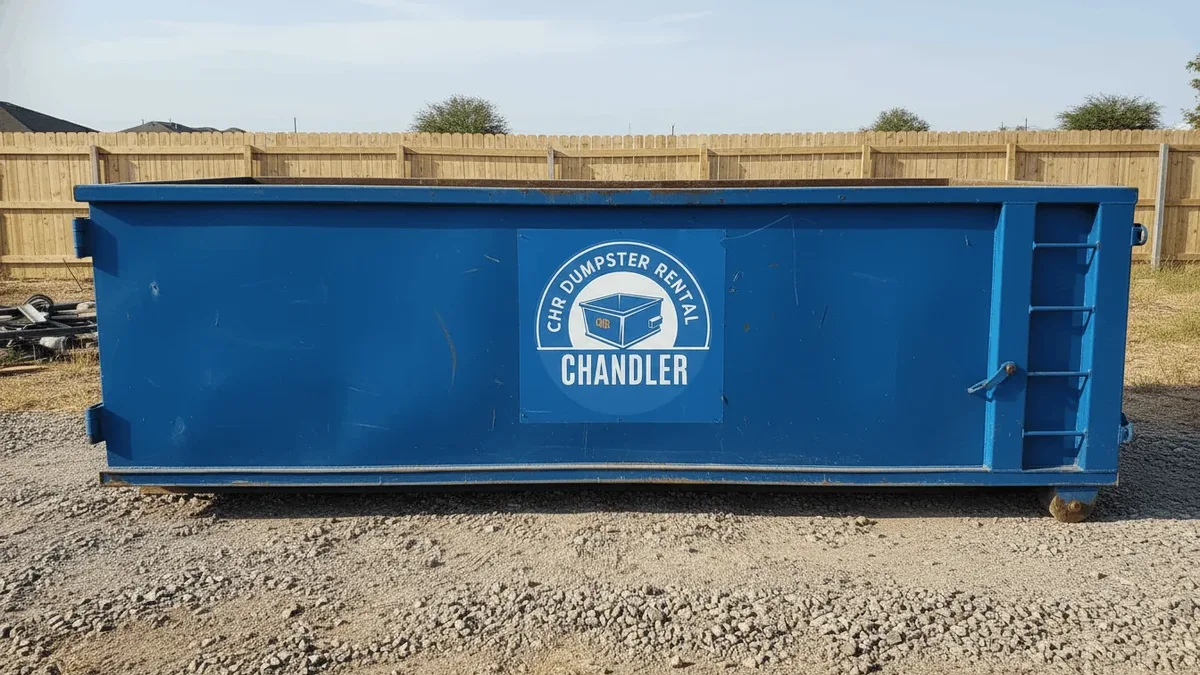
The most common question we hear from folks around Chandler and the East Valley is some version of “how big a dumpster do I actually need?” It’s a fair question, because guessing wrong in either direction costs you — too small and you’re arranging a second pickup, too big and you’re paying to haul away mostly empty space on a driveway that didn’t need the extra footprint. The good news is that most projects fall into a pretty predictable pattern once you know what to look for. Below is a practical breakdown of our five container sizes, plus the one factor people underestimate more than any other: weight.
A 10-yard dumpster measures roughly 14 ft long by 7.5 ft wide by 3.5 ft tall and holds about 3 pickup-truck loads of debris, with a weight allowance of 1–2 tons. It’s the right call for small, contained jobs — a single-room cleanout, a garage or shed purge, a small bathroom gut, or a single dense load like a driveway’s worth of concrete or dirt. It’s also the size that fits most comfortably on a tight driveway or narrow side yard, which matters if you’re working one of the older, closer-set lots near historic downtown Chandler, where the streets and setbacks predate the wide driveways common in newer East Valley subdivisions. If your project is “a weekend of hauling stuff to the curb” rather than “a full renovation,” start here.
The 15-yard dumpster comes in at about 16 ft long by 7.5 ft wide by 4.5 ft tall, holding 4–5 pickup-truck loads with a 2–3 ton weight allowance. It sits between the 10 and the 20, and it’s a good fit for projects that are a notch bigger than a single-room cleanout but don’t need a full-scale roll-off — think a garage plus attic combined, a deck removal, a single-layer roofing tear-off, or a kitchen or bathroom remodel that’s mostly cabinets and flooring rather than structural work. If you’re torn between the 10 and the 20, the 15 is worth asking about specifically; it often threads the needle without paying for space you won’t fill.
The 20-yard dumpster is our most requested size, and it’s built for the range most Chandler-area projects actually fall into. At roughly 22 ft long by 7.5 ft wide by 4.5 ft tall, it holds about 6 pickup-truck loads with a 3–4 ton weight allowance — enough for a whole-house cleanout, a multi-room remodel, a full roof tear-off up to about 50 squares, or a larger property cleanup, including storm debris after a monsoon blows through. It’s also a common choice for moderate-density loads that mix household junk with some heavier material, since the weight allowance has some real room in it before it becomes the limiting factor. If you’re not sure which size to book and your project feels “medium,” the 20-yard is the safest default to ask about.
Step up to a 30-yard dumpster — about 22 ft long by 7.5 ft wide by 6 ft tall, holding roughly 9 pickup-truck loads with a 4–5 ton weight allowance — when you’re tackling a larger home renovation, a whole-house decluttering ahead of a move or an estate cleanout, a multi-room remodel, or a new-construction cleanup where framing offcuts and packaging add up fast. This size is also popular for larger junk removal jobs where volume, not weight, is the limiting factor — bulky furniture, old appliances, and general household volume that just takes up a lot of space without being especially heavy.
The 40-yard dumpster is our largest container, at roughly 22 ft long by 7.5 ft wide by 8 ft tall, holding about 12 pickup-truck loads with a 5–6 ton weight allowance. It’s built for major demolition debris work, large-scale construction dumpster rental projects, and commercial jobs generating a high volume of lighter debris — framing lumber, drywall, packaging, and general job-site waste. It’s less often the right call for dense material like concrete or dirt on its own, since those loads hit their weight allowance long before they fill the box — which brings us to the part of sizing that trips up more people than the size chart itself.
Every container size comes with a weight allowance, and it’s entirely possible to fill a large dumpster only halfway and still hit that limit, especially with dense debris like concrete, brick, tile, roofing shingles, or dirt. A 20-yard box of shingles can weigh far more than a 20-yard box of household junk, even though they take up the same physical space. This is the single biggest reason a “bigger is safer” approach to sizing can backfire — a bigger container doesn’t buy you a proportionally bigger weight allowance, and dense material can push you over the limit regardless of how much room is left in the box. If your project involves concrete, brick, roofing, or other heavy material, our concrete & heavy debris page covers how we handle those loads specifically. For a closer look at what drives your total cost once size and weight are both in the mix, see our guide to what actually drives dumpster rental cost.
Two local factors worth keeping in mind when you size a container here. First, monsoon season, roughly mid-June through September, tends to spike demand for mid-size containers as homeowners deal with downed tree limbs, damaged fencing, and roof repairs after a thunderstorm or haboob blows through — a 15 or 20-yard usually covers that kind of cleanup comfortably. Second, lot size varies a lot across our service area, from tighter, older driveways near historic downtown Chandler to the wider lots typical of newer subdivisions out toward Gilbert, Queen Creek, and San Tan Valley — if your driveway is on the narrower side, mention it when you call so we can confirm the size you want will actually fit.
If you’ve read through the sizes above and you’re still not sure, that’s completely normal — and it’s exactly what a quick phone call is for. Tell us what you’re clearing out, roughly how much of it there is, and whether it leans toward bulky-and-light or dense-and-heavy, and our crew will walk you through sizing on the spot. It’s a faster and more accurate path than trying to eyeball cubic yards from a size chart, and it means you get a size — and a flat rate quoted up front — that actually fits your project the first time. Call CHR Dumpster Rental Chandler at (480) 576-5580 to talk through your project, whether it’s a residential dumpster rental or a larger commercial dumpster rental. You can also browse the full lineup on our dumpster sizes page.
FAQs
The 20-yard dumpster is the most common all-around choice for whole-home cleanouts and mid-size remodels — it’s large enough for most projects without paying for space you won’t use. Smaller single-room jobs often do fine with a 10 or 15-yard instead.
Not necessarily — going bigger only helps with volume, not weight. If your debris is dense material like concrete, brick, or shingles, a larger container can still hit its weight allowance before it’s full. Describing your project on a call gets you a more accurate size than guessing up.
Yes — the 10-yard is our most compact option and works well on tighter lots, including some of the older, closer-set driveways found near Chandler’s historic downtown. If placement space is a concern, mention it on your call so we can confirm it fits.
It depends on the roof size and the number of shingle layers being removed, since shingles are heavy for their volume. A 20-yard is common for smaller roofs up to roughly 50 squares, but larger or multi-layer tear-offs may need to size up specifically for weight, not just space — see our roofing dumpster rental page.
Call and describe the project instead of guessing either direction. Our team will ask about volume and material type and recommend the size that actually fits, which is more reliable than picking between two sizes on a chart alone.
Ready when you are
Call and you will speak to someone local who knows the streets, the permit rules and which box actually fits your lot. Flat rate quoted up front.
Keep reading
Dumpster rental cost isn't one flat number — it's shaped by a handful of factors that stack together. Here's what actually moves the needle, so you know what questions to ask before you call.
Most household and construction debris is fair game for a roll-off — but Arizona law draws hard lines around a handful of materials, and landfills add a few practical restrictions of their own. Here's what's allowed, what isn't, and where the restricted items actually need to go.
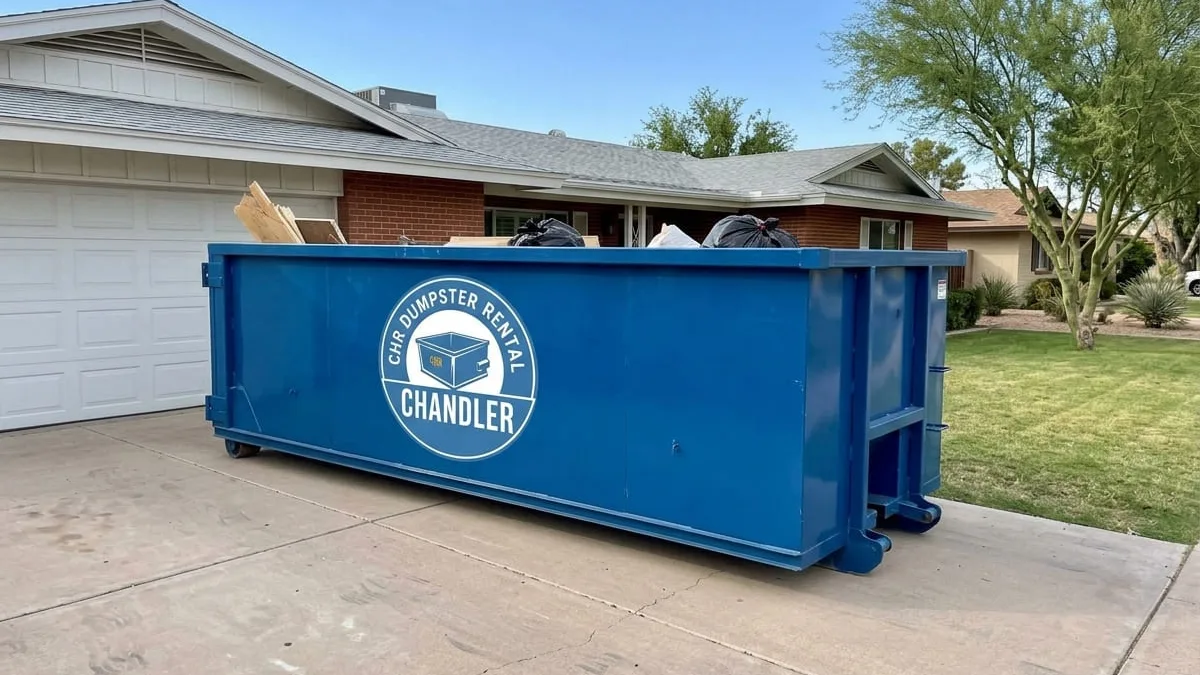
Private property never needs a permit. Everything past your driveway line depends on exactly where you are — and in the Chandler area, that genuinely means one of four different answers. Here's how the rules actually break down.