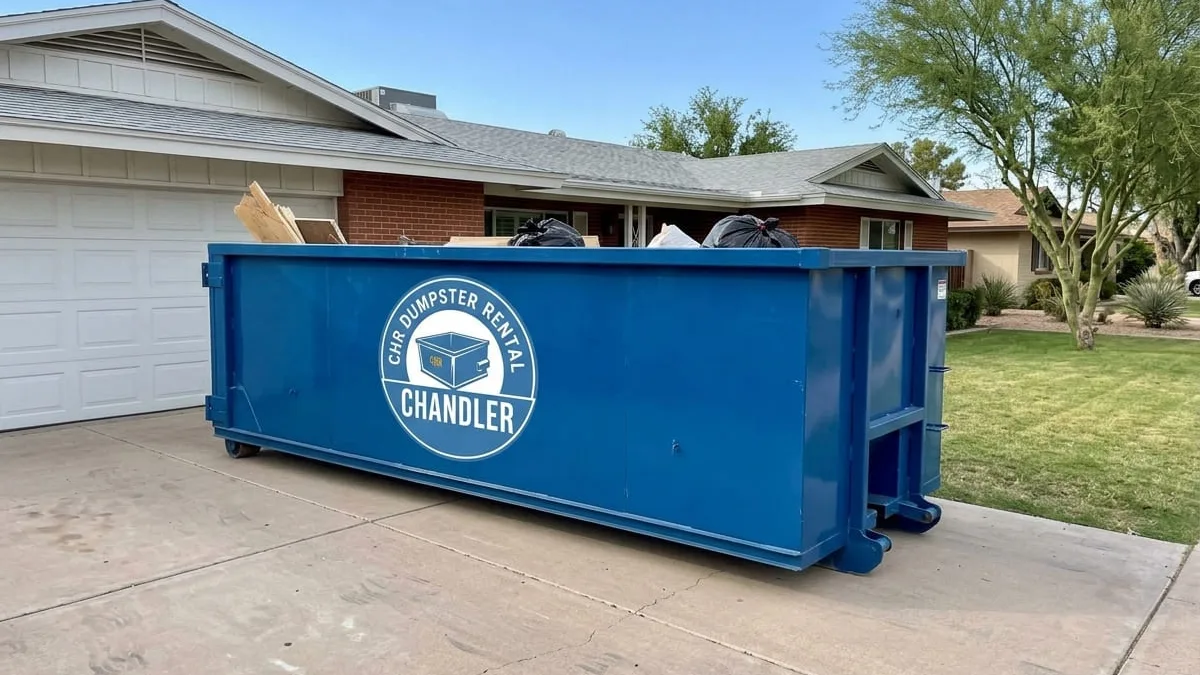
A dumpster is the right tool for the bulk of what comes out of a home cleanout, a remodel, or a jobsite — but a handful of specific materials are better handled through dedicated recycling channels instead of a roll-off, whether because Arizona law requires it or because it's simply the more responsible route. Here's a plain rundown of what falls into each category around Maricopa County, and where those materials generally need to go.
Curbside and Municipal Recycling
Most cities and towns across the Chandler area, including Chandler itself, run their own residential curbside recycling programs separate from trash pickup, typically covering standard materials like cardboard, paper, metal cans, and certain plastics. Those programs are run at the municipal level, so the specifics — what's accepted, pickup schedule, container type — vary by city. For anything municipal recycling doesn't cover, Maricopa County maintains its own recycling resources that residents and contractors across the county can use as a reference point for where specific materials go, from electronics to household hazardous waste. It's worth a look before assuming something has to go in the trash or the dumpster by default.
Electronics: Recommended, Not Legally Required
Arizona doesn't have a statewide law banning electronics from landfills, which surprises some people given how many other states have adopted one. That said, most landfills and transfer stations in and around Maricopa County won't accept a load with TVs, computers, monitors, or similar e-waste mixed in regardless of state law, so in practice these items still need a different route. Maricopa County's recycling resources include options specifically for electronics, and routing old devices through one of those channels is the better move on both counts — it avoids a rejected load, and it's simply better handling for materials that can contain components worth recovering rather than burying.
Lead-Acid Batteries: An Actual Legal Requirement
This one isn't a recommendation, it's Arizona law. A.R.S. § 44-1322 prohibits disposing of lead-acid batteries — car batteries and similar — in a landfill or by incineration. Most auto parts stores and battery retailers take old batteries back for recycling, often at no cost, which makes this one of the more straightforward items on this list to handle correctly. It's also one of the more common things to end up mixed into a dumpster load by accident during a garage cleanout, so it's worth a specific check before a load goes out.
Tires: A Fee and Registration Program, Not a Landfill Ban
Tires are managed a little differently than batteries. There's no blanket Arizona law banning whole tires from landfills the way there is for lead-acid batteries. Instead, tires are handled through the state's Waste Tire Fee program, run by the Arizona Department of Revenue under Publication 560, alongside a separate Arizona DEQ Waste Tire Compliance and Enforcement Program that regulates tire storage sites. In practical terms, that means tires get routed through their own dedicated system rather than a straightforward landfill ban, and they should stay out of a standard dumpster regardless. Tire retailers and service shops typically handle disposal directly when replacement tires are purchased, which is usually the simplest path for a handful of old tires.
Household Hazardous Waste
Paint, solvents, pesticides, motor oil, and similar chemicals fall outside both curbside recycling and standard dumpster loads. Maricopa County's recycling resources include information on household hazardous waste handling, and it's worth checking there before assuming a chemical container has to go in the trash. As a general dumpster rule, wet or liquid paint and any household chemical shouldn't go in a roll-off at all — our guide to what can go in a dumpster in Arizona covers the full list of restricted materials in more detail.
Appliances With Refrigerant
Refrigerators, freezers, and window or central air-conditioning units all contain refrigerant that has to be properly recovered by a certified technician before the unit itself can be scrapped, recycled, or landfilled. This is common enough on Arizona home cleanouts — with how universal AC is across the state — that it's worth checking before an old unit goes anywhere. Most appliance retailers and HVAC companies handle this removal as a routine part of replacing a unit.
A Note for Santan and Pinal County Residents
Most of our service area sits in Maricopa County, but Santan and the surrounding Pinal County pocket are the one exception worth flagging here. Maricopa County's recycling resources are built around Maricopa County residents and aren't necessarily the right reference point for a Santan-area household — Pinal County runs its own separate set of resources, and Pinal County Public Works is the right first call for anything recycling or disposal-related on that side of the county line. It's a small distinction, but worth knowing if you're in that specific pocket of our service area.
What This Means for Your Dumpster Load
None of the above changes what goes into a standard roll-off for the vast majority of a project — general household debris, furniture, construction and remodel material, and yard waste are all still fair game. It's specifically the handful of categories above — electronics, batteries, tires, chemicals, and refrigerant-bearing appliances — that are worth routing separately, whether Arizona law requires it or it's simply the better practice. If you're ever unsure whether something belongs in the dumpster or needs a different route, it's easier to ask before loading than to deal with a rejected load afterward. Call CHR Dumpster Rental Chandler at (480) 576-5580 and we'll tell you straight which category something falls into.