Every general contractor and trade crew working the Chandler area eventually runs into the same two questions on debris disposal: what size box actually fits the job, and how do you keep a container on-site without it becoming the thing that slows the schedule down. Neither question has a one-size answer, because construction debris isn’t one material — it’s a mix of light, bulky stuff and dense, heavy stuff, often in the same dumpster. Here’s how we think about sizing and scheduling for active jobsites around Chandler and the East Valley.
Mixed C&D Debris: Volume Usually Wins
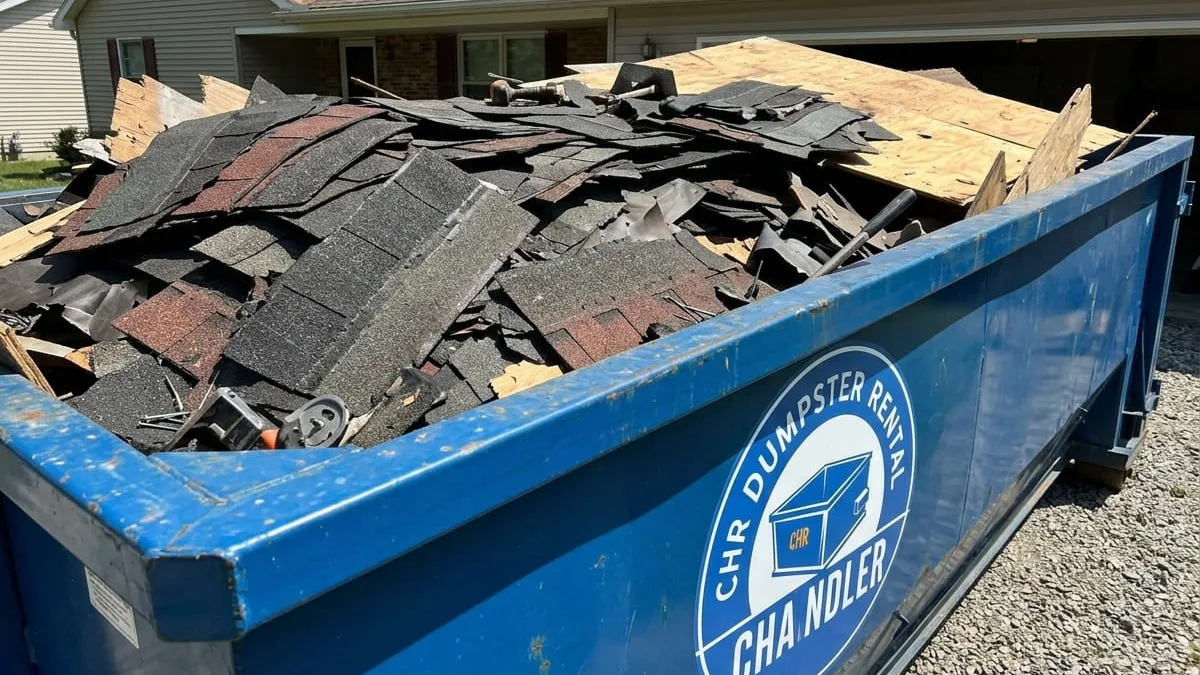
Most general construction and demolition (C&D) debris — framing lumber, drywall offcuts, packaging, insulation, trim, siding, old cabinetry — is bulky rather than dense. It fills a container's volume well before it comes close to the weight allowance, which means sizing for this kind of load is mostly a question of how much square footage of work is generating debris. A single-room remodel or a small addition typically runs comfortably in a 15 or 20-yard box; a larger renovation, a new-build framing cleanup, or a multi-trade remodel generating several dumpsters' worth of packaging and offcuts often calls for a 30 or 40-yard, especially on commercial fit-out work. Our construction dumpster rental page has the full size lineup, and if you're not sure which end of that range your job falls into, describing the scope on a call gets you a faster, more accurate answer than guessing off a square-footage chart alone.
Concrete, Brick, and Fill: Weight Wins Every Time
Dense material flips the equation entirely. Concrete, brick, block, tile, dirt, and other fill material can hit a container's weight allowance when the box still looks half empty — a 20-yard dumpster loaded with concrete can weigh out long before it fills out. This is the single most common sizing mistake we see on jobsites: ordering by the volume of debris in front of the crew rather than by what that specific material weighs per cubic yard. If a job is generating a meaningful amount of concrete, broken slab, brick, or block, that debris almost always belongs in a dedicated heavy-material box rather than mixed into a general C&D container. Our concrete & heavy debris service exists specifically for this — a container built and rated for dense loads, so a crew isn't guessing at how much slab it can load before hitting a limit. Mixing a modest amount of concrete into an otherwise general debris load is usually fine; loading an entire demo'd driveway or patio slab into a standard box is where crews get caught off guard.
Reading a Jobsite Before You Order
A quick mental sort before ordering saves a lot of back-and-forth later. Ask what the job is actually producing: is it mostly framing, drywall, and packaging (light, bulky — size for volume), mostly concrete, block, or dirt (heavy, dense — size for weight, likely a dedicated heavy box), or a genuine mix of both (often the right call is one general C&D container plus a separate heavy box for the concrete portion, rather than trying to force everything into one container). Crews that separate concrete and heavy fill from general debris at the point of loading almost always come out ahead on both cost and scheduling, since it avoids a container getting flagged as overweight partway through a job.
Swap-Outs on Active Jobsites
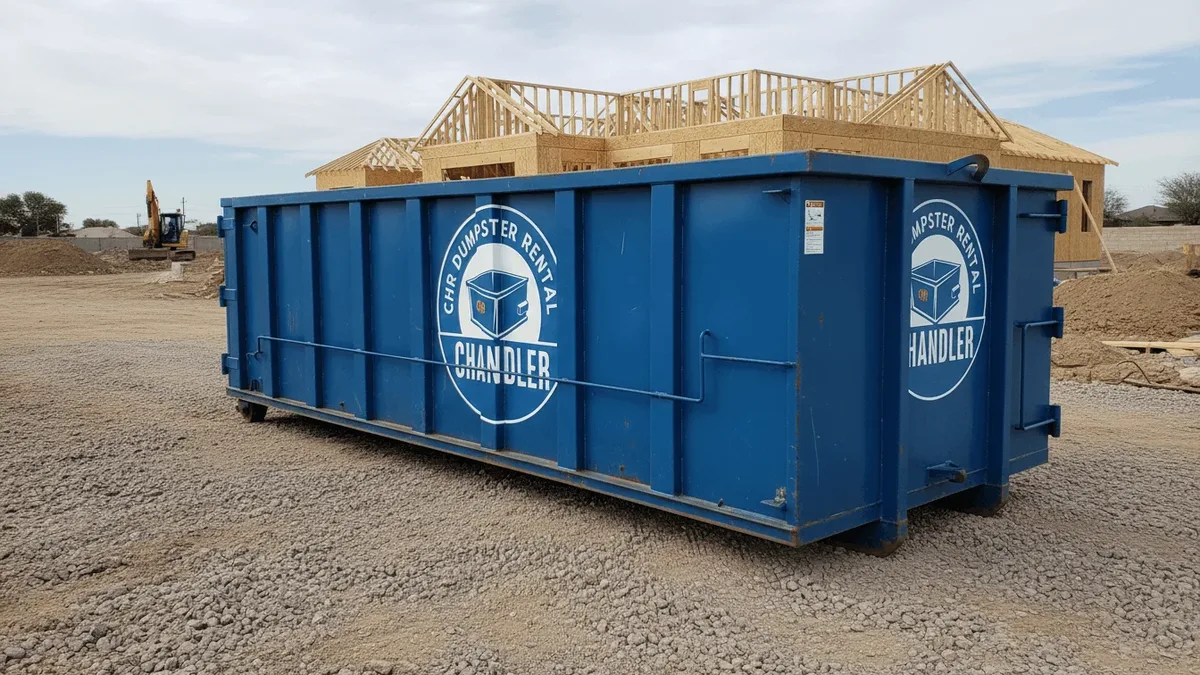
Debris disposal on a live jobsite isn't usually a single container, it's a rotation — a box fills, gets hauled and weighed, and an empty one comes back so work doesn't stall waiting on disposal. That swap-out cadence is where scheduling matters as much as sizing. A framing crew generating debris every day needs a different rotation than a remodel crew producing debris in bursts around demo days. Telling us up front how the job is phased — steady daily debris versus a few heavy demo days followed by lighter finish-out work — lets us plan swap timing instead of reacting to a full box after the fact. For jobs where the schedule is tight and a container can't sit waiting, our same-day dumpster rental service is built for exactly that kind of turnaround.
Keeping the Container Where It Won't Block Work
On an active site, placement matters almost as much as size. A container parked where it blocks material deliveries, equipment access, or a trade's staging area creates friction every single day it sits there, not just on delivery and pickup day. Walk the site with the schedule in mind — where deliveries stage, where equipment needs to maneuver, where the next few weeks of work will actually happen — before deciding where the box goes. On tighter in-town lots or sites with limited street frontage, this planning matters even more; our Chandler dumpster permit guide covers what's required if a container needs to sit in the street rather than fully on the lot.
What Stays Out of a Jobsite Container
The same restricted-material rules that apply to any dumpster apply on a jobsite, and they come up more often here than on a typical residential cleanout. Wet paint, solvents, fuel, and other chemicals can't go in. Asbestos-containing material — a real possibility on renovation or demolition work in older buildings — is never allowed in a standard container anywhere, full stop; that's a job for a licensed abatement contractor before any debris gets loaded. Refrigerant-containing equipment needs the refrigerant recovered by a certified technician first. Our full guide to what can go in a dumpster in Arizona covers the complete list, and it's worth a read for any crew running a demo-heavy job.
Getting Sizing Right the First Time
The fastest way to avoid a mid-job size correction or an overweight surprise is to describe the actual job when you call — what's being demo'd or built, roughly how much concrete or heavy fill is involved versus general debris, and how the schedule is phased. That's a more reliable path to the right container than working from a generic size chart, especially once concrete and mixed debris are both part of the picture. Call CHR Dumpster Rental Chandler at (480) 576-5580 to talk through a jobsite, whether it's a single remodel or a multi-phase build, and see our dumpster sizes page for the full container lineup.