Chandler sits in the Sonoran Desert, and the seasonal hazard that actually shapes how we plan deliveries here isn't the severe thunderstorm or tornado risk you'd hear about in other parts of the country — it's monsoon season. Roughly mid-June through September, the Phoenix metro sees a real, recurring pattern of thunderstorms, sudden dust storms, lightning, and flash flooding, and it's a big enough part of the local calendar that it's worth a plain explanation of what it means for scheduling a dumpster delivery or a jobsite container during those months.
What Monsoon Season Actually Looks Like Here
Arizona's monsoon isn't a single storm system — it's a seasonal shift in wind patterns that brings in moisture from the south and produces thunderstorms, often building through the afternoon and hitting hardest in the evening. Those storms bring genuinely damaging straight-line wind, frequent and dangerous lightning, and heavy rain that can turn a normally dry wash into a flash flood in a matter of minutes. And ahead of some of the bigger storm cells, the outflow can kick up massive walls of blowing dust known as haboobs, which can drop visibility to near zero across a wide stretch of the valley with very little warning.
The Great Haboob of July 5, 2011
The clearest example of what monsoon season can produce here is the dust storm the City of Chandler's own website refers to as the Great Haboob of July 5, 2011 — a wall of dust roughly a mile high that swept across the entire Phoenix metro, Chandler included, and made national news. It's the kind of event that's easy to describe in the abstract but genuinely dramatic in person, and it's a useful reference point for anyone who hasn't lived through an Arizona monsoon season yet: this isn't an occasional light dust haze, it's a real weather event capable of shutting down visibility and outdoor work across the whole valley at once.
How We Plan Deliveries Around It
None of this means dumpster deliveries stop for the summer — the overwhelming majority of monsoon-season days are ordinary Arizona weather, hot and clear. What it does mean is that when a monsoon warning, an active dust storm, or a lightning-producing cell is moving through the delivery window, we hold or reshuffle the schedule rather than send a driver and a loaded truck into it. Blowing dust cuts visibility for a driver managing a large vehicle and a roll-off trailer; an active lightning cell is a real hazard for anyone outside directing a delivery or hooking up a container; and flash flooding can make normally passable washes or low-lying streets genuinely unsafe to cross with a heavy truck. Rescheduling a delivery by a few hours, or to the next morning once a cell has cleared, is a far better outcome for everyone than pushing through conditions that don't need to be pushed through. If your project has a tight timeline during monsoon season, our same-day dumpster rental service still applies on clear days — it's specifically the active-storm window where we adjust.
What This Means If You're Scheduling a Delivery in Summer
If you're booking a dumpster for a June-through-September project, it's worth building a little flexibility into the delivery window where the schedule allows it, the same way you'd plan around any other real weather pattern. We'll always communicate directly if a scheduled delivery needs to shift because of active weather rather than leaving anyone guessing, and in most cases a shift is measured in hours, not days. Roofing tear-offs are a common summer job that intersects with this directly — a real share of the roofing work we see through monsoon season is storm-damage related, and our roofing tear-off dumpster guide covers sizing for that kind of job specifically.
Surface Protection Doesn't Change With the Forecast
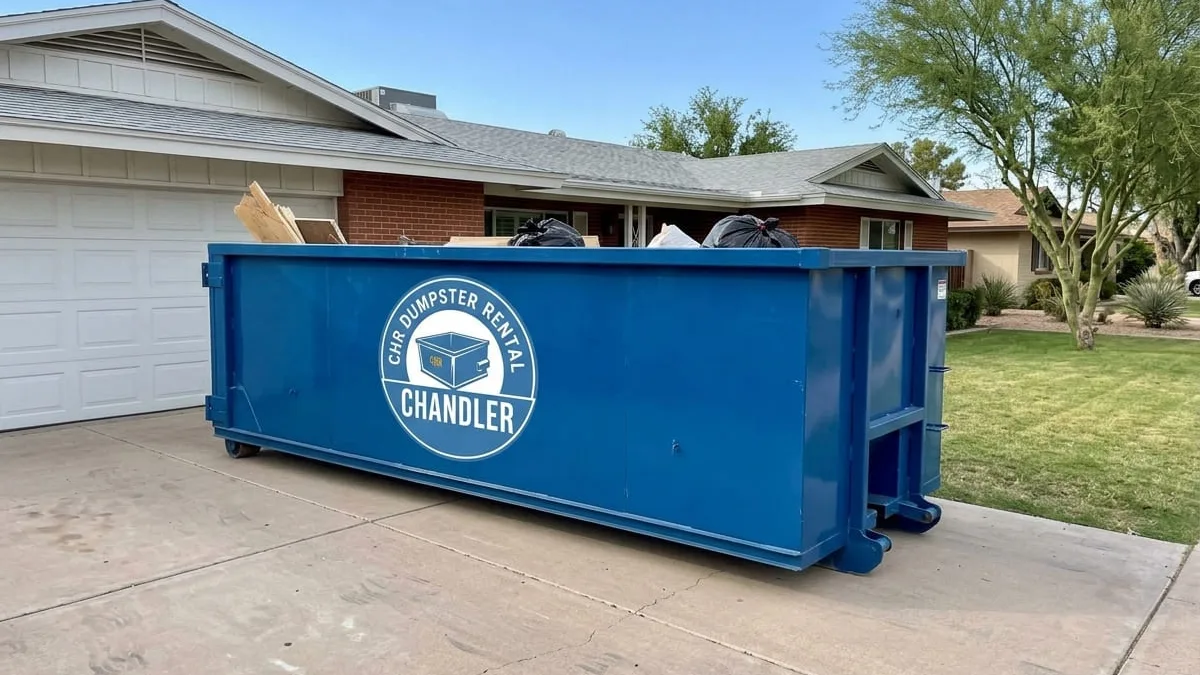
One thing that stays exactly the same whether it's monsoon season or the driest week of winter: boards go under the container's rails on every delivery, every time, to protect the driveway surface. That's not a monsoon-specific precaution — it's standard practice on every job we run, rain or shine, dust storm or clear sky. What monsoon season changes is the delivery scheduling around active weather, not the placement and protection steps once the container is down.
Summer Heat Is the Other Factor
Alongside monsoon storms, Chandler summers bring genuinely extreme heat — Phoenix Sky Harbor's all-time record high, 122°F, was set on June 26, 1990, a day still remembered locally as “Black Monday.” It's not the same kind of hazard as an active storm cell, but it's a real factor on any outdoor project through the summer months, and it's worth planning heavier physical work — loading a dumpster included — around the cooler parts of the day where possible.
Booking Around the Season
None of this is meant to make monsoon season sound like a reason to delay a summer project — most projects across Chandler run through the summer without any weather disruption at all. It's simply the honest picture of how deliveries get handled on the days when active weather actually moves through, and why a rescheduled delivery during a storm warning is a normal, planned-for part of doing business here rather than a surprise. Call CHR Dumpster Rental Chandler at (480) 576-5580 to book a delivery any time of year, and we'll flag directly if monsoon-season timing is worth building into the plan.