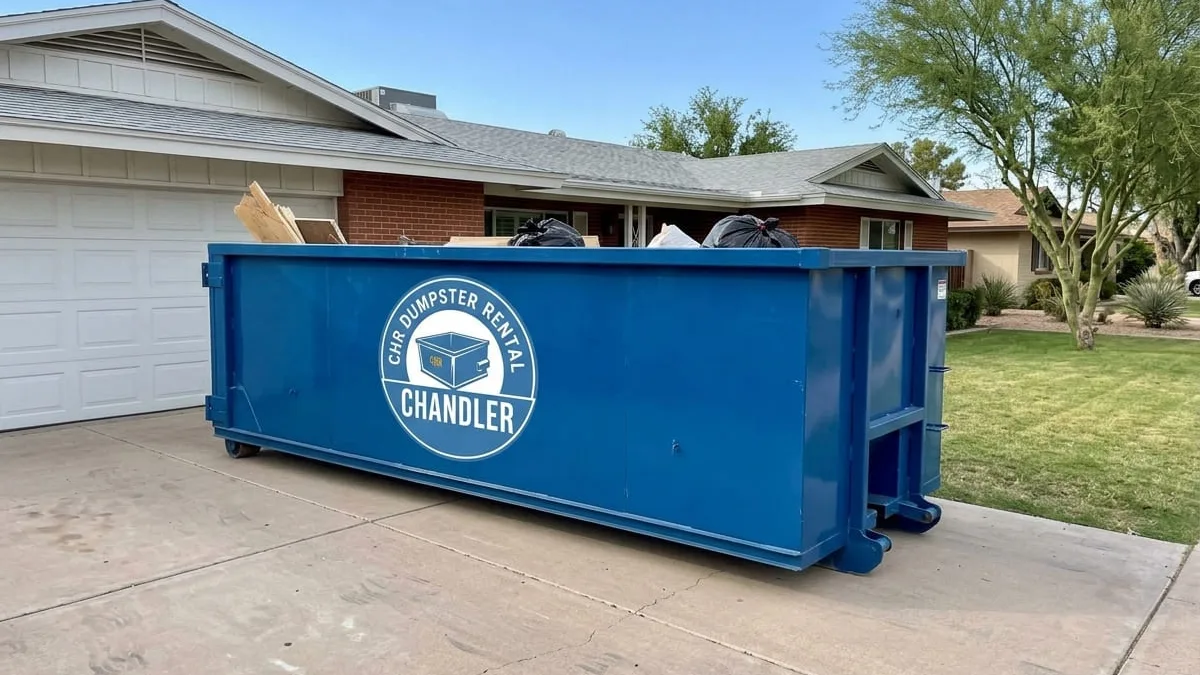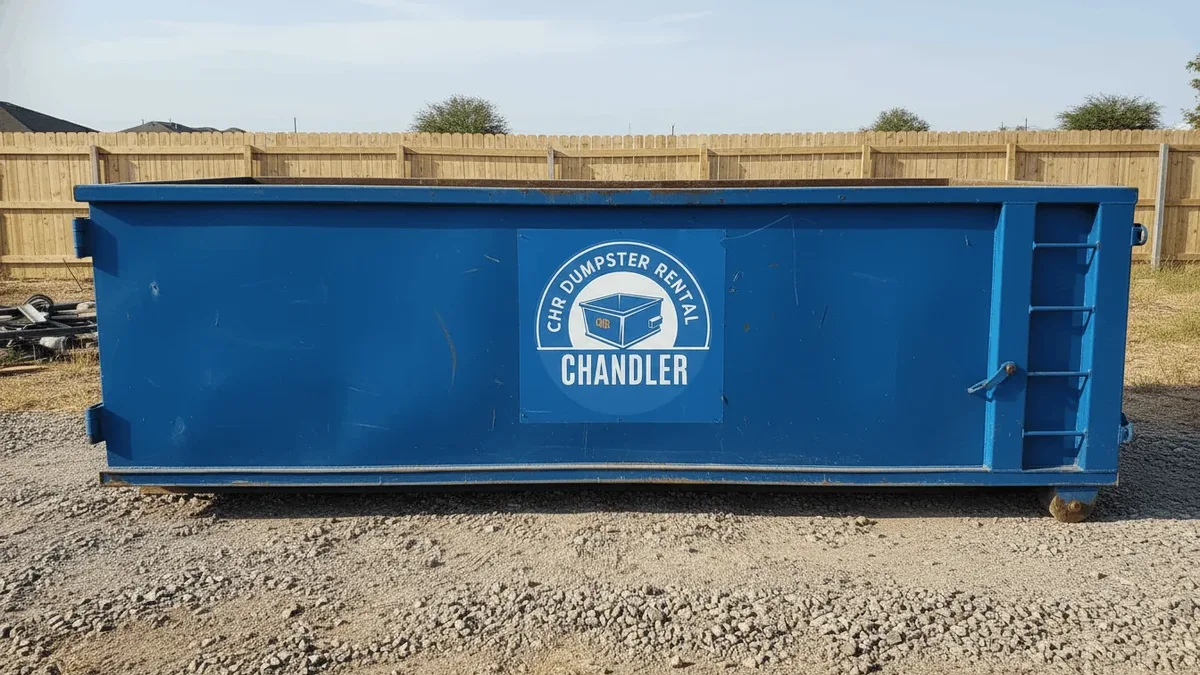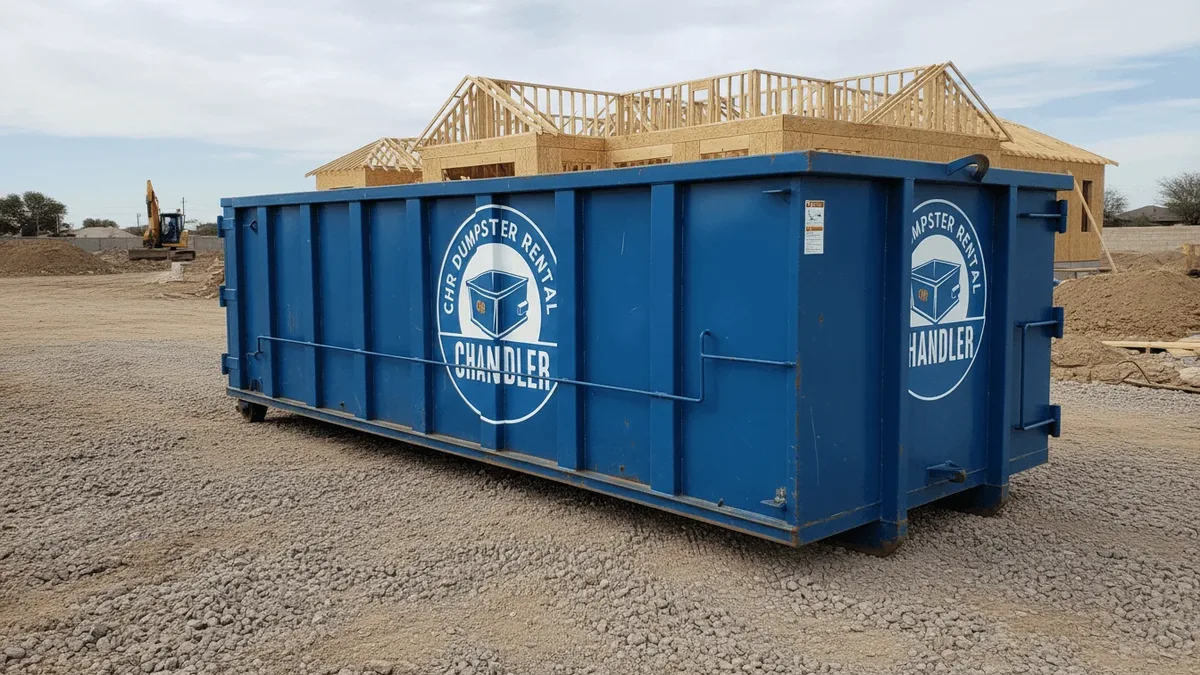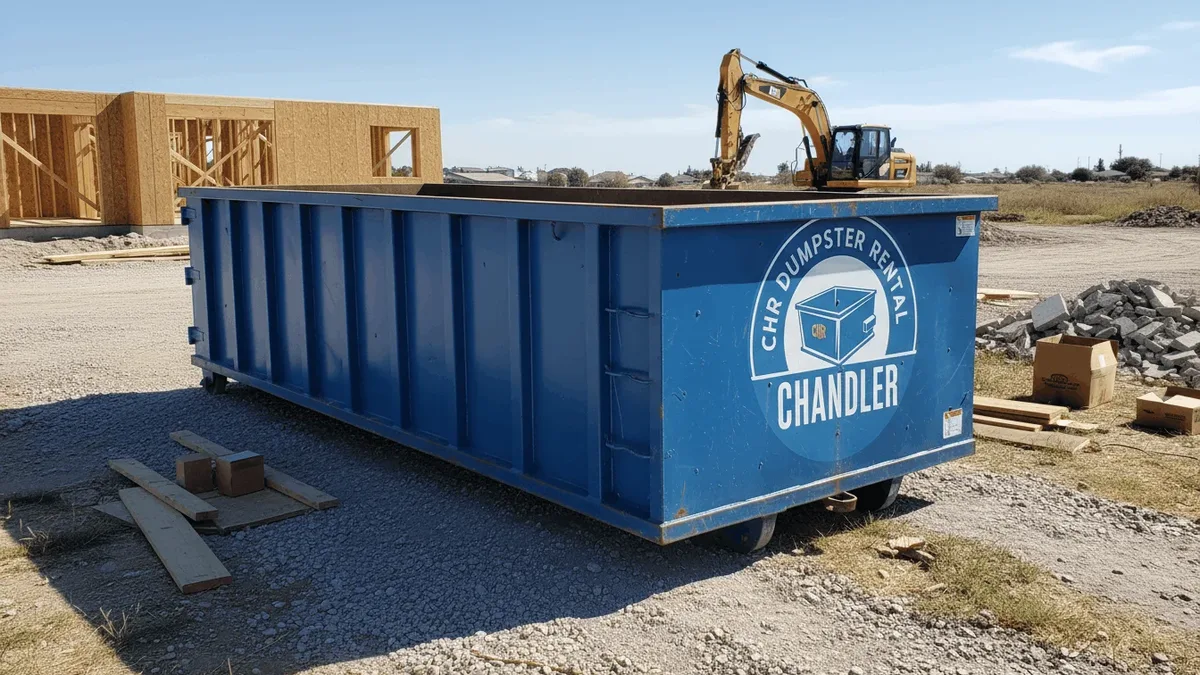
Chandler's historic downtown traces back to the town's original 1912 townsite, laid out by Dr. Alexander J. Chandler and centered on a landscaped public park that's still the heart of the district today — the Hotel San Marcos, which opened just a year later in November 1913, still stands nearby. It's a genuinely distinct part of the city, and the built environment reflects it: narrower lots, older driveways, mature trees, and street layouts designed decades before a 22-foot roll-off container was ever a consideration. None of that makes a dumpster delivery impossible around historic downtown, but it does mean placement deserves more upfront thought than it would on a newer subdivision lot with a wide modern driveway.
Truck Space: What a Delivery Actually Needs
A roll-off delivery truck needs meaningfully more room to maneuver than the container itself. As a general planning figure, count on roughly 60 feet of clear space for the truck to position, extend its hoist, and place the container in a straight line — that's the truck's length plus the room it needs to back in and align, not just the length of the box going down. Overhead clearance matters just as much: plan for about 25 feet of clear space above the delivery path, since the hoist arm extends upward during placement and pickup. On the older, tree-lined streets typical of historic downtown, that overhead figure is often the tighter constraint of the two — mature canopy trees that look fine for everyday street parking can crowd the clearance a roll-off truck needs. If a driveway or approach looks tight on either dimension, mention it when you call so delivery can be planned around it rather than discovered on arrival.
Narrower, Older Driveways
A number of homes and small commercial buildings near historic downtown sit on lots platted well before modern driveway widths became standard, and some driveways simply won't comfortably fit a larger container or give a truck the straight approach it needs. This is where sizing and placement planning intersect: a 10 or 15-yard container is not just often the right size for a smaller downtown lot's project, it's sometimes the only size that fits the available space at all. If you're working a historic-district property, it's worth mentioning the lot's layout when discussing size, not just the project scope.
Surface Protection Matters More on Older Driveways
Older concrete and asphalt driveways can be more prone to cracking or surface damage under a loaded container's weight than a newer pour, simply due to age and decades of freeze-thaw-equivalent desert temperature swings, expansion, and wear. Boards go under the container's rails on every delivery we make, on every driveway, regardless of age or condition — it's standard practice, not an extra step reserved for older surfaces. But on a historic-district driveway, that protection step is doing more work, and it's a good reason to flag any known cracking or soft spots on the driveway before delivery day so placement can account for it.
When Street Placement Is the More Realistic Option
On some of the tightest historic-district lots, a driveway simply isn't a workable option, and placement in the street ends up being the more practical answer. That's a normal, manageable situation, but it does mean the placement needs to go through the City of Chandler's Encroachment Permit process rather than skipping permitting entirely. That process falls under City Code Part VII, Section 46.2, and is administered by the Transportation and Development Department's Civil Engineering Plan Review Section. The City publishes a Utility Permit Manual and a Certificate of Quantities form, though both are oriented toward utility and pavement work rather than dumpster placement specifically, and there's no published flat fee for dumpster placement that we've been able to find. The honest, reliable path is to call the Transportation and Development Department directly to confirm current requirements and any applicable fee before booking street placement — our Chandler dumpster permit guide covers this process in full, alongside the other permitting authorities across our broader service area.
Working Around Neighbors and Foot Traffic
Historic downtown Chandler sees a fair amount of pedestrian activity around the park and the surrounding business district, more than a typical residential subdivision street. If a project sits close to that activity, it's worth thinking through visibility and access for foot traffic in addition to the truck-space and permit questions above — not a regulatory requirement, just good practice on a project in a walkable, well-used part of the city.
Planning a Downtown-Area Delivery
None of this is meant to make a historic-district delivery sound complicated — most of these projects go smoothly with a little upfront planning. The difference from a standard suburban driveway job is mainly in what's worth mentioning at booking: the lot's actual width, any overhead tree canopy along the approach, the driveway's age and condition, and whether street placement might end up being necessary. Flagging those details early lets us plan the right size and the right approach before a truck ever shows up. Call CHR Dumpster Rental Chandler at (480) 576-5580 to talk through a property near historic downtown or anywhere else in the Chandler area, and see our dumpster sizes page if a smaller container is likely the better fit for a tighter lot.